
Why a new fully automatic umbrella matters in real buying decisions
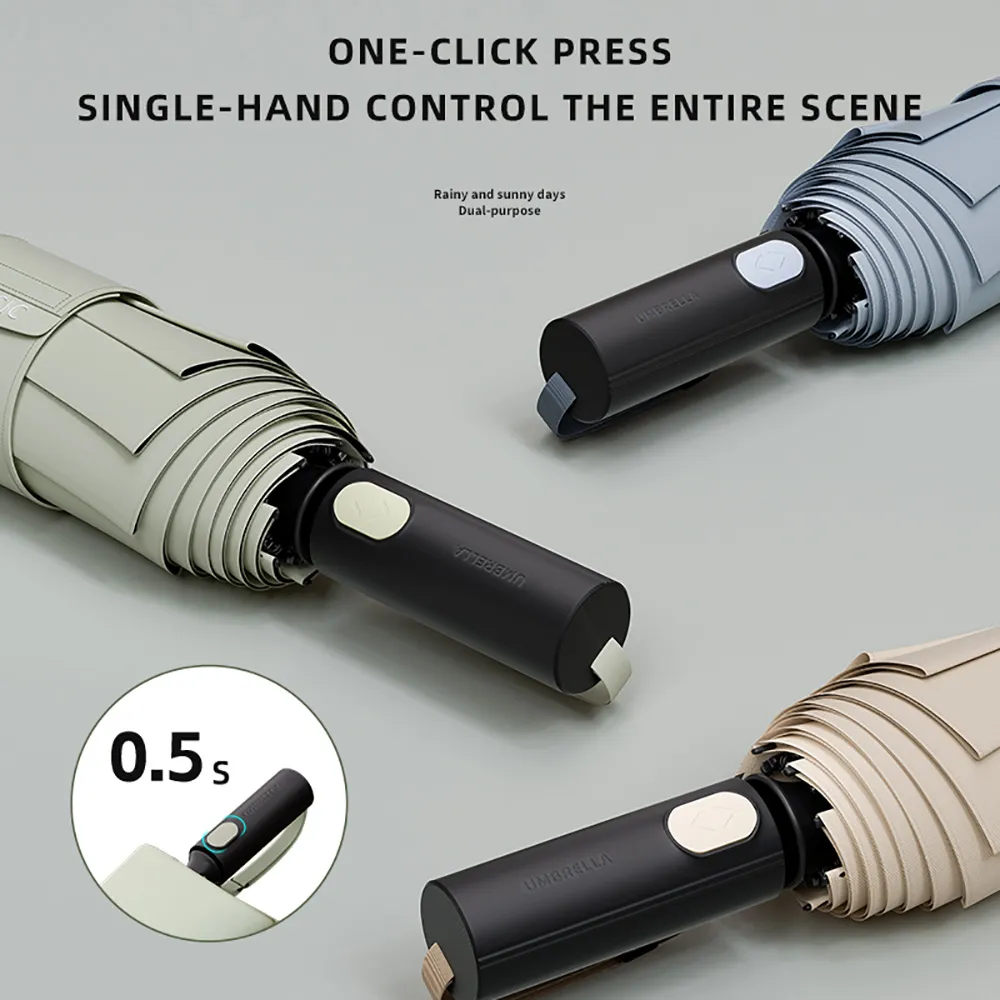
A new fully automatic umbrella is not just a convenience item; for many buyers it is a small product that solves an everyday operational problem. Commuters want one-hand use at a train platform. Retailers want a compact item that looks clean on a shelf. Sourcing teams want something simple enough to manufacture consistently, but durable enough that customers do not return it after the first storm. That is where the design of a foldable umbrella starts to matter more than it first appears.
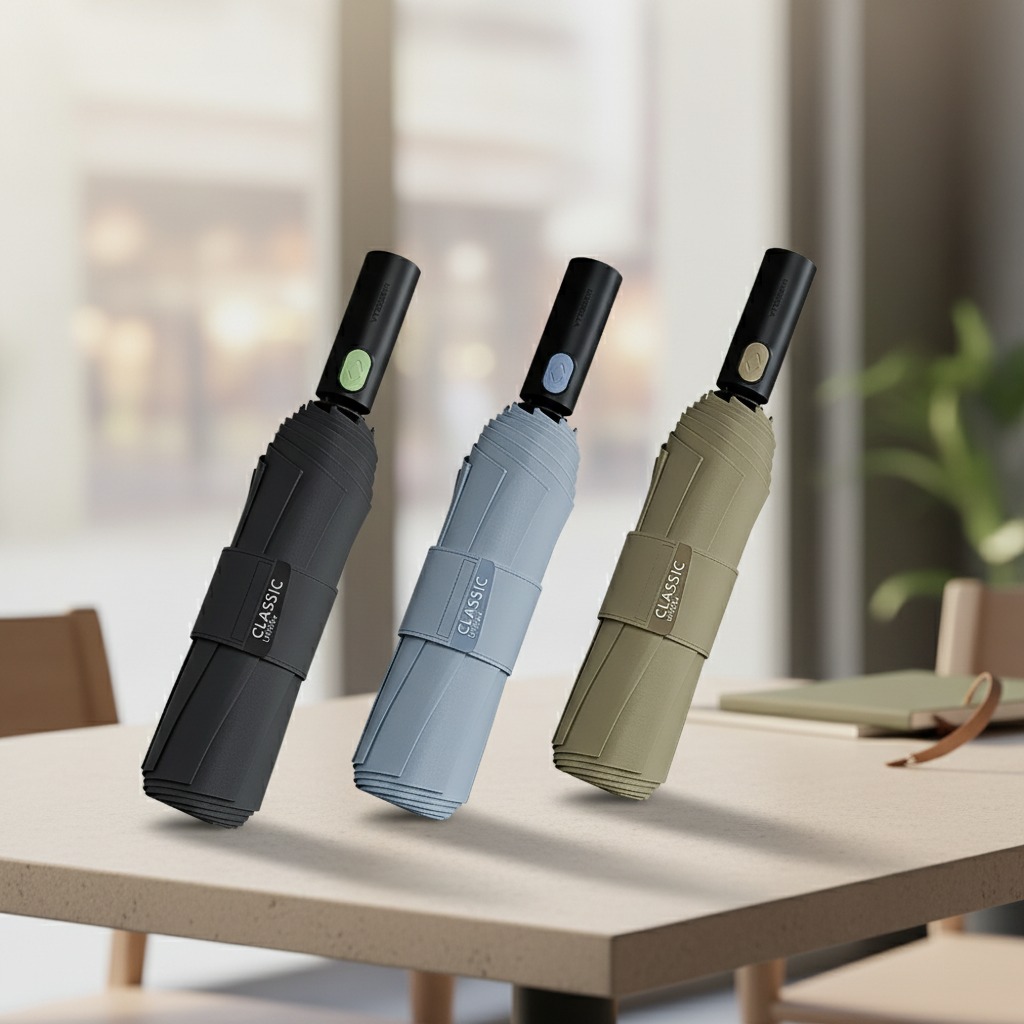
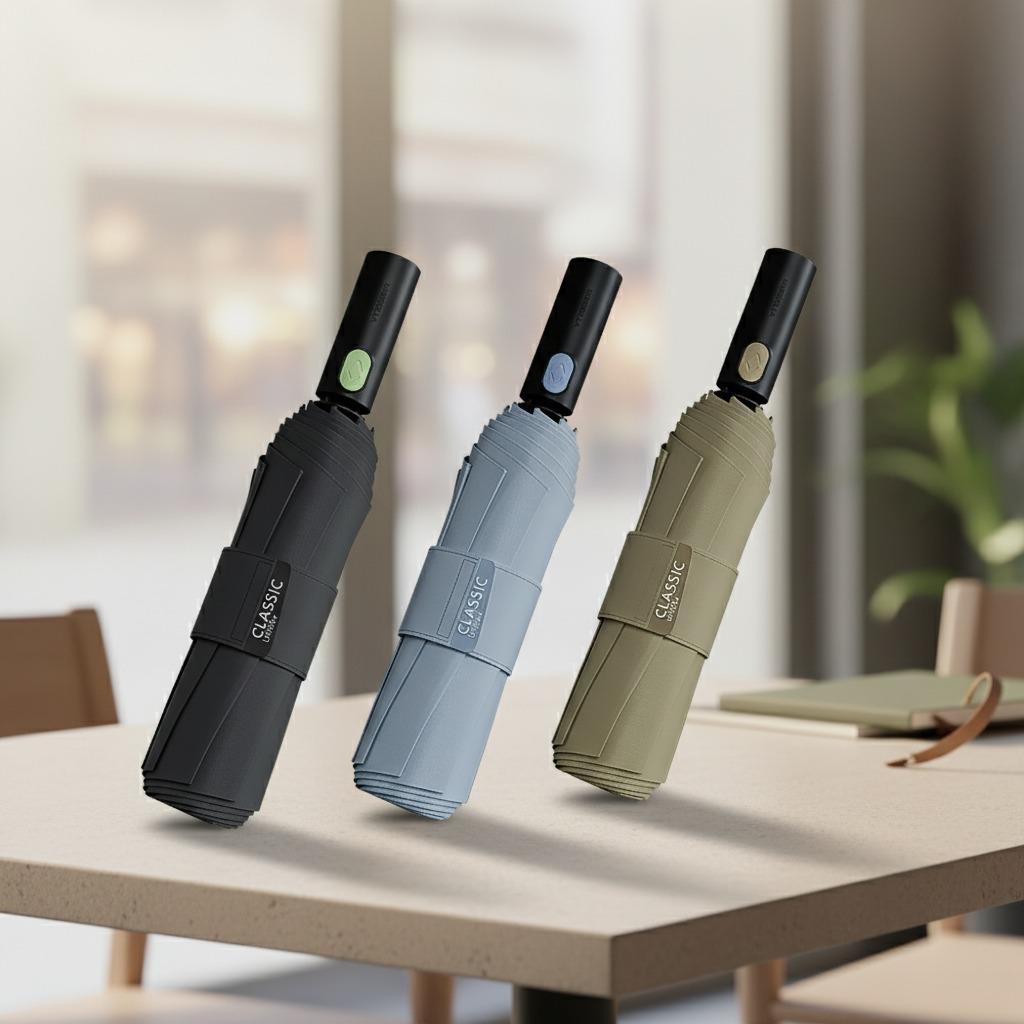
The visible product here points to the kind of compact, bag-friendly umbrella that travels well and stores easily. The folded canopy sits tightly around a telescoping shaft, with a rounded cylindrical handle and a small button or badge area near the top. That is a familiar layout in consumer umbrella manufacturing, but the details still affect usability, perceived quality, and price positioning. If the product is being considered as a retail item or promotional SKU, those details are often what separate an ordinary umbrella from one that feels worth carrying.
What buyers usually want from this category
When a sourcing manager compares compact umbrellas, the decision is rarely about one feature alone. The real question is how the product balances convenience, protection, and manufacturing consistency.
For this style of umbrella, buyers usually care about:
- Easy one-hand operation if the mechanism is truly automatic
- A compact folded profile that fits a backpack, tote, or briefcase
- A canopy surface that looks neat when closed and reasonably clean when open
- Materials that can handle frequent use without feeling flimsy
- A handle and shaft assembly that does not loosen after repeated opening and closing
The product shown fits the “carry it everywhere” use case. That is useful for commuters, travelers, and promotional programs where people are more likely to keep the item if it feels compact and practical. The multiple color variants also matter. Black is the safe default, but blue-gray, tan, and pale green suggest the product can be positioned as a lifestyle accessory rather than a purely functional rain tool.
Fully automatic, manual, and compact: what the buyer should clarify
The term “new fully automatic umbrella” sounds straightforward, but in sourcing it is worth slowing down and confirming the mechanism. A compact umbrella may be automatic, semi-automatic, or manual, and those differences affect both assembly and user expectations.
Fully automatic
A fully automatic umbrella typically opens and closes at the push of a button. That is attractive for commuters and one-handed use in the rain. It also increases complexity. More moving parts generally mean more careful component matching, stronger internal springs, and tighter attention to long-term wear.
Manual compact umbrella
A manual compact umbrella may be cheaper and mechanically simpler. It can still be a good product, especially if the buyer values low return risk and simpler construction. But it lacks the quick convenience many end users expect from an automatic model.
Why this distinction matters
If the umbrella is marketed as automatic but the mechanism is not clearly defined, the buyer can run into packaging, customer-service, and claim issues later. For example, a retailer may assume one-handed open-and-close performance, while the product actually only opens automatically. That kind of mismatch is not dramatic at the factory level, but it is exactly the sort of small gap that creates complaints in the field.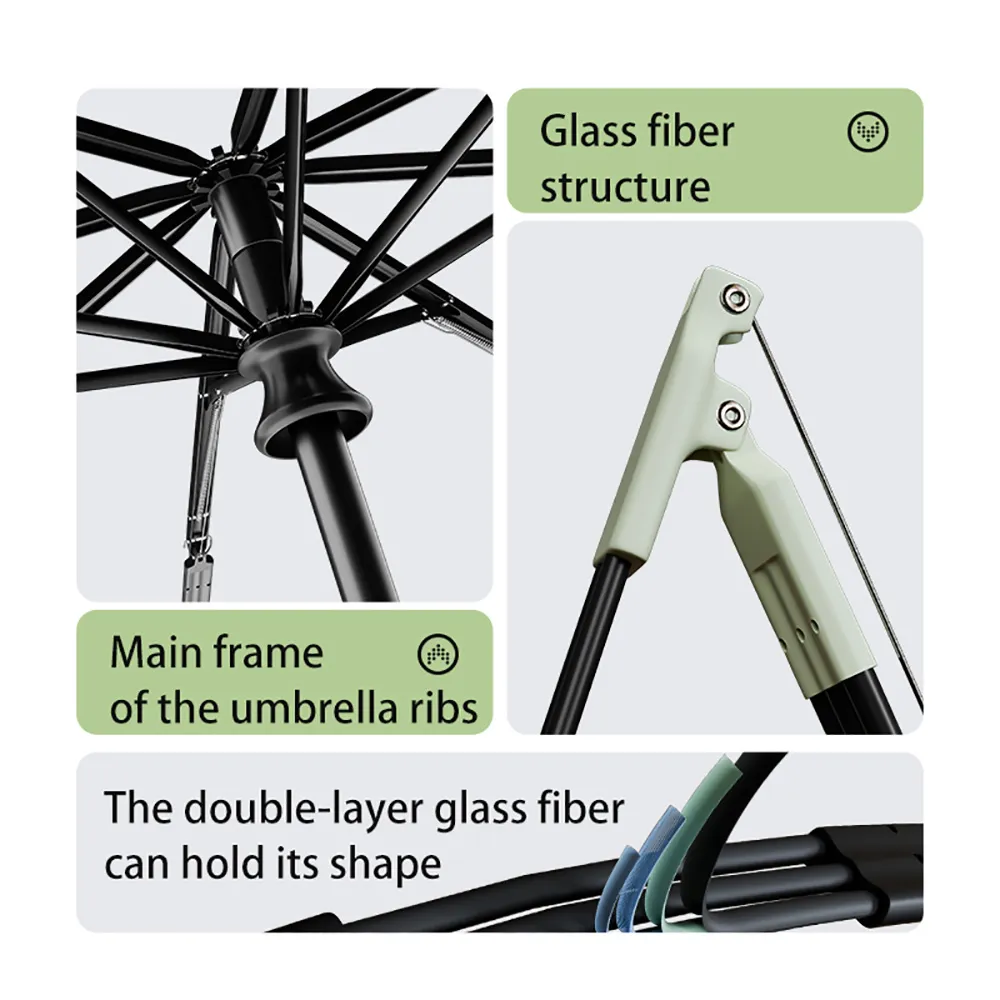
Materials and construction: what can be said from the visible product
Based on the visible design, this umbrella appears to use a synthetic matte canopy fabric, a molded plastic or coated metal handle, and a telescoping shaft with folded ribs tucked inside a compact shell. That is a standard and sensible construction for this class of product.
The canopy looks like a water-resistant textile, though the exact fiber is not visible. It may be stitched or heat-sealed depending on the manufacturer’s chosen process. The finish is matte rather than glossy, which usually reads better on retail shelves because it feels more modern and less plasticky.
The handle shape is also important. A rounded cylindrical grip can be comfortable in the hand and easy to produce by injection molding or coating over a metal core. For buyers, the question is not only whether the handle looks good, but whether it can survive being tossed into a bag, pulled out wet, and used repeatedly without becoming sticky or loose.
Quick reference: where this umbrella type fits best
This compact design is usually strongest in a few situations:
- Daily commuting in cities
- Travel carry in backpacks or handbags
- Retail and promotional programs needing a neat, giftable item
- Everyday personal rain protection where storage space is limited
It is less obviously suited to buyers who need a heavy-duty storm umbrella, a large golf-style canopy, or a specialized outdoor-use product. The compact folding geometry is a convenience advantage, but compactness can also limit canopy coverage and structural margin. That is not a flaw by itself; it is simply the tradeoff buyers should keep in mind.
Where wind performance enters the discussion
One phrase that often appears in this category is windproof automatic umbrella. The problem is that “windproof” can mean many things in marketing, and not all of them are equally meaningful. From a buyer’s point of view, the real question is whether the frame design and rib construction can tolerate common gusts without inverting or stressing the joints too quickly.
With the product shown, the external appearance suggests a neat compact frame, but no exact rib count or reinforcement detail can be confirmed from the image alone. So a cautious buyer should not assume storm-grade performance just because the listing uses a strong phrase. If wind resistance is important, ask for structural details, sample testing, or at least clearer specifications before approving the item for launch.
That caution applies especially in retail channels. Customers will usually forgive a small umbrella that is clearly a commuter accessory. They are less forgiving if they were promised storm-level performance and get a light-duty product instead.
Lightweight carry is part of the value proposition
A lightweight automatic umbrella is attractive for the same reason people carry compact tech accessories: if it is easy to carry, it gets used. If it feels bulky, it stays at home.
The closed form here is streamlined and easy to imagine in a bag or car door pocket. That makes it a strong candidate for everyday carry, but the buyer should still check the actual mass and balance once samples are available. A compact umbrella that is too top-heavy can feel awkward even if it looks elegant. Small practical issues like that matter more than some catalogs admit.
UV protection and multi-season positioning
Some buyers will also look for UV protection umbrella claims, especially in markets where umbrellas are sold for both rain and sun use. That can be a useful positioning strategy, but it should be handled carefully. If UV protection is part of the sales story, the material specification and testing basis need to be clear. Otherwise the claim becomes a weak spot, not a selling point.
Without supplied evidence, it would be irresponsible to assume UV-blocking performance from the visible product alone. Still, the compact umbrella format can support multi-season marketing if the canopy material and surface finish are chosen with that purpose in mind. Buyers should ask whether the same base platform is intended for rain-only use or broader weather protection.
Common mistakes buyers make with compact umbrellas
The biggest mistake is treating all compact umbrellas as interchangeable. They are not. The hidden differences are usually in the mechanism, fabric quality, rib durability, and handle finish.
A few practical issues are worth flagging:
- Overlooking whether the umbrella is truly fully automatic or only automatic in one direction
- Approving style samples before checking closure smoothness and button feel
- Assuming a neat folded appearance guarantees durability
- Prioritizing a low unit price while ignoring how returns will affect total cost
- Forgetting that promotional umbrellas often need a stronger visual finish than a basic utility item
These are the kinds of errors that sound minor in a sourcing meeting and become expensive after shipment.
What to ask before placing a purchase order
If you are evaluating this umbrella style for procurement, a short sample checklist helps keep the conversation grounded.
Ask the supplier to confirm:
- Whether the model is fully automatic, semi-automatic, or manual
- The canopy material family, even if the exact fiber blend is not yet finalized
- Handle and shaft material construction
- Whether the folded umbrella uses stitched seams or another assembly method
- Available color options for the first production run
- Packaging format for retail or promotional use
You do not need every answer in the first email, but you do need enough clarity to avoid a mismatch between what sales promises and what production can actually deliver.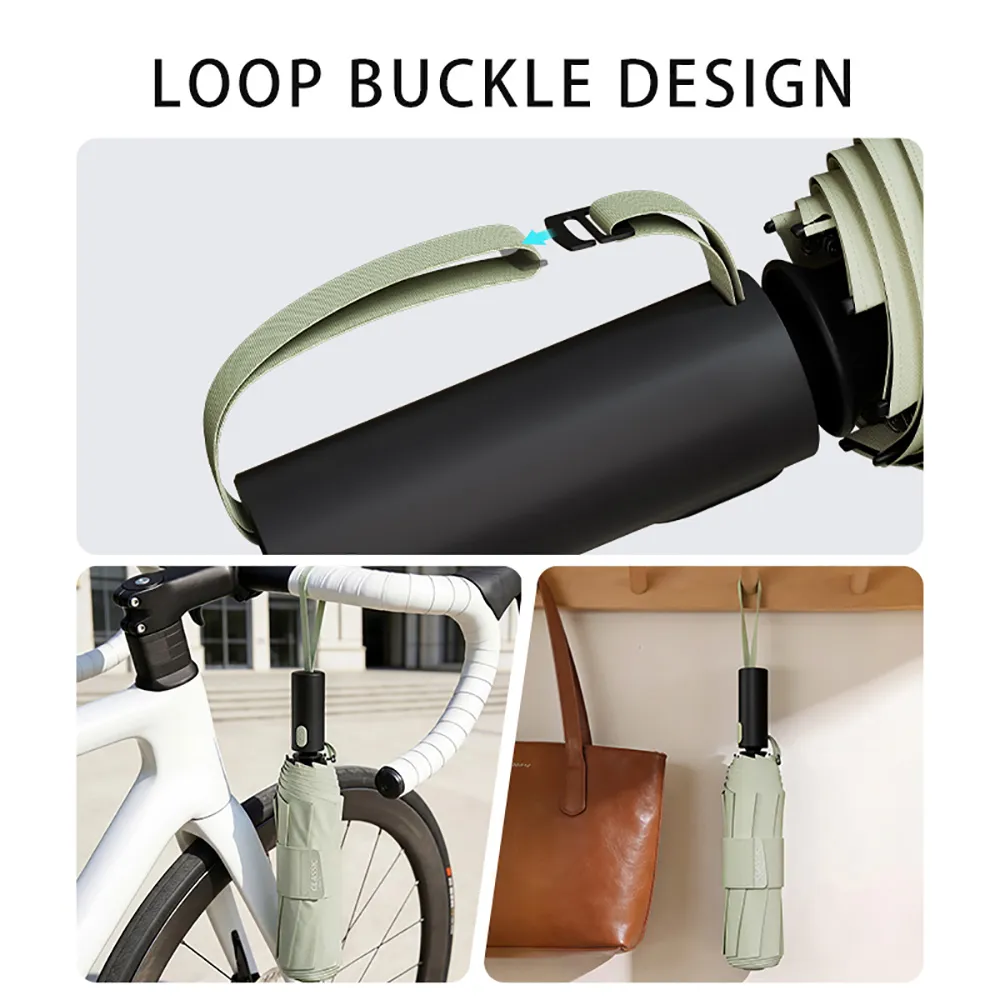
FAQ for sourcing and product teams
Is this the kind of umbrella suited to commuter use?
Yes. The compact folded profile and easy carry format make it a sensible commuter umbrella, especially where bag storage and quick access matter.
Can the same design work for retail and promotional programs?
It can, provided the finish quality and packaging are consistent with the channel. Compact umbrellas often perform well in retail because they are easy to merchandise and easy for consumers to understand.
Should buyers rely on visual inspection alone?
No. The outside appearance tells you the product category and general style, but not the mechanism quality, structural durability, or true weather performance.
What is the safest way to position this product?
As a practical everyday compact umbrella for rain protection and travel carry. More specific performance claims should only be used if they are documented.
Final buyer takeaway
The main appeal of a new fully automatic umbrella in this compact format is simple: it is easy to carry, easy to sell, and easy for end users to keep in rotation. That said, compact umbrellas live or die on details that are not obvious in a front-facing product photo. Buyers should confirm the mechanism, assess the frame quality, and resist the temptation to let marketing language do the work of engineering data.
If your next project needs a compact, enclosed umbrella design with multiple color options and a streamlined retail look, this is a sensible starting point. The next step is to request a sample, verify the opening and closing behavior, and make sure the product promise matches the actual build. That small bit of discipline usually saves more trouble than it costs.