
What buyers really need from student raincoats
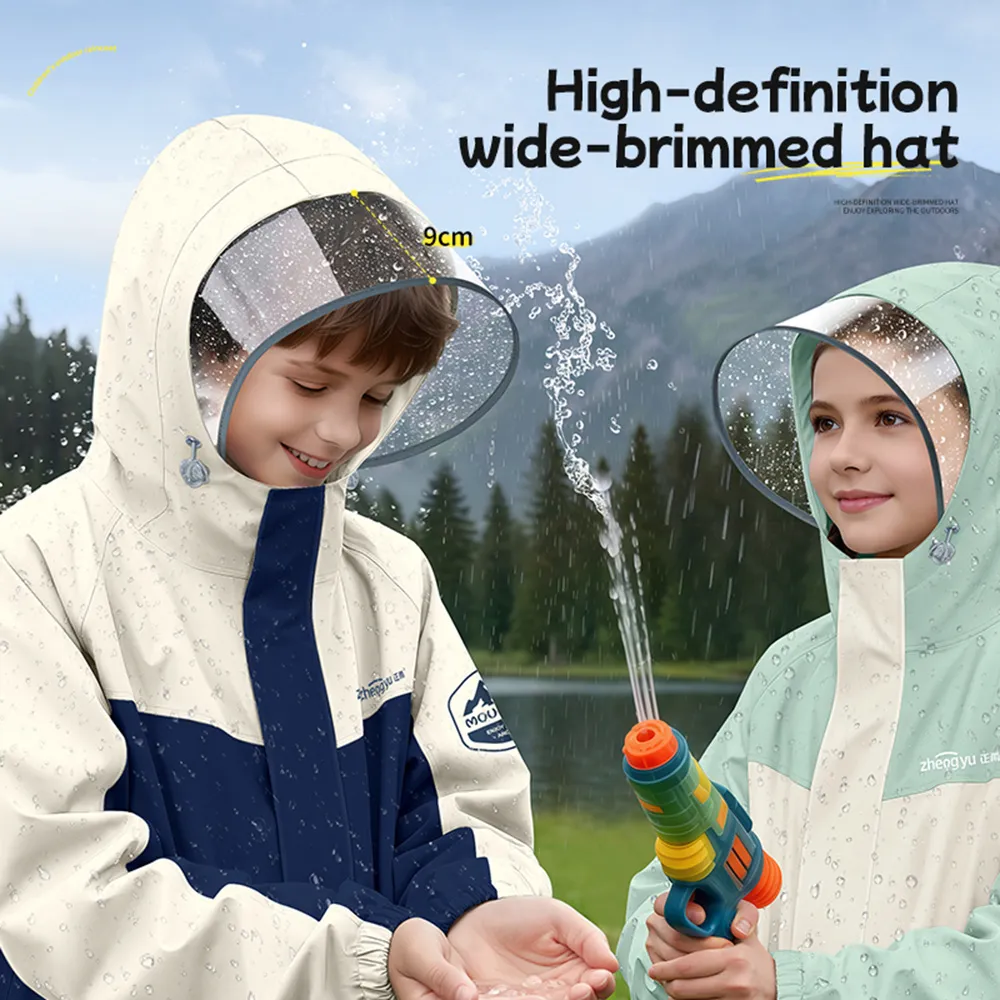
When sourcing student raincoats, the obvious requirement is wet-weather protection. The less obvious one is wearability. A raincoat can keep a child dry and still fail in the real world if it is too heavy for daily use, too stiff for classroom-to-playground movement, or too short to cover a backpack and uniform hem. For school buyers, apparel teams, and outdoor brands, that makes the decision more nuanced than simply choosing a waterproof shell.
The best student raincoats have to solve a practical bundle of problems at once: rain resistance, breathability, ease of movement, and a fit that children will actually tolerate. Add in school pickup routines, walking commutes, after-class sports, weekend trips, and the occasional camping or hiking day, and the brief gets more demanding than many first-time buyers expect.
That is why it helps to treat this category less like a fashion item and more like functional outerwear. A good raincoat is judged by how it behaves in a downpour, how fast a child can get it on, and whether it still feels manageable after an hour of wear. Those are the decisions this article is meant to support.
Quick buyer takeaways
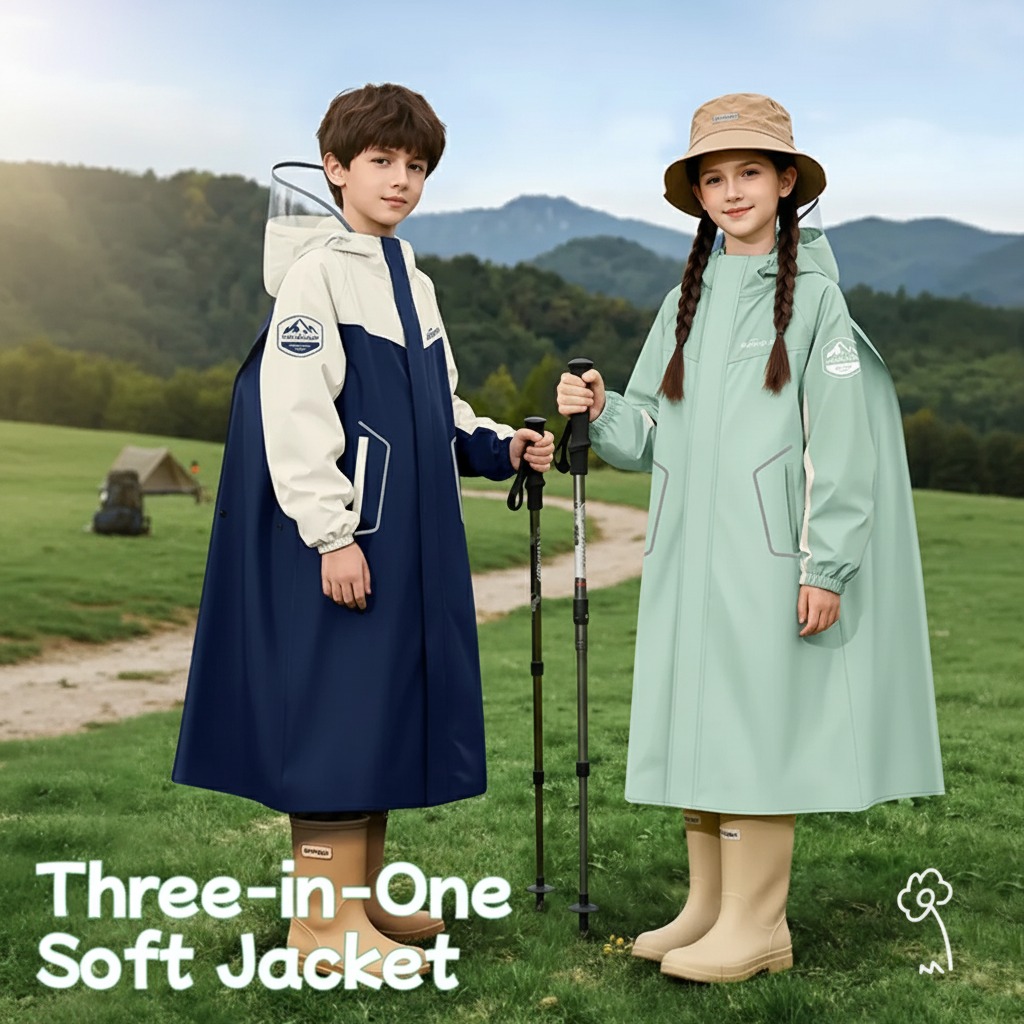
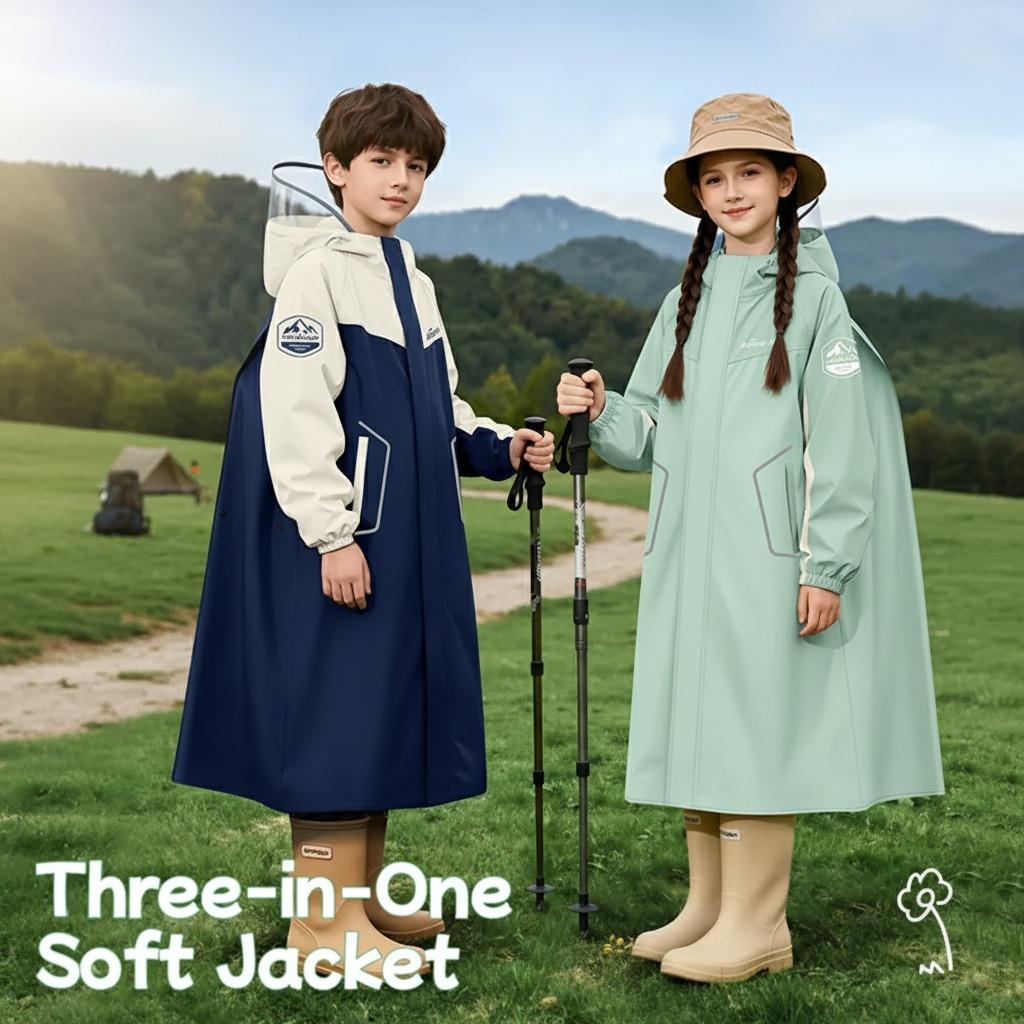
The product shown in the preparation data reads like a children’s outdoor rain jacket or rain cape with hood, built around a loose, A-line silhouette and longer coverage. That shape matters. It gives more protection than a standard waist-length jacket and can be useful for school bags, layered clothing, and sudden weather changes. The visible design also suggests a soft shell with a matte finish rather than a shiny, stiff plastic feel.
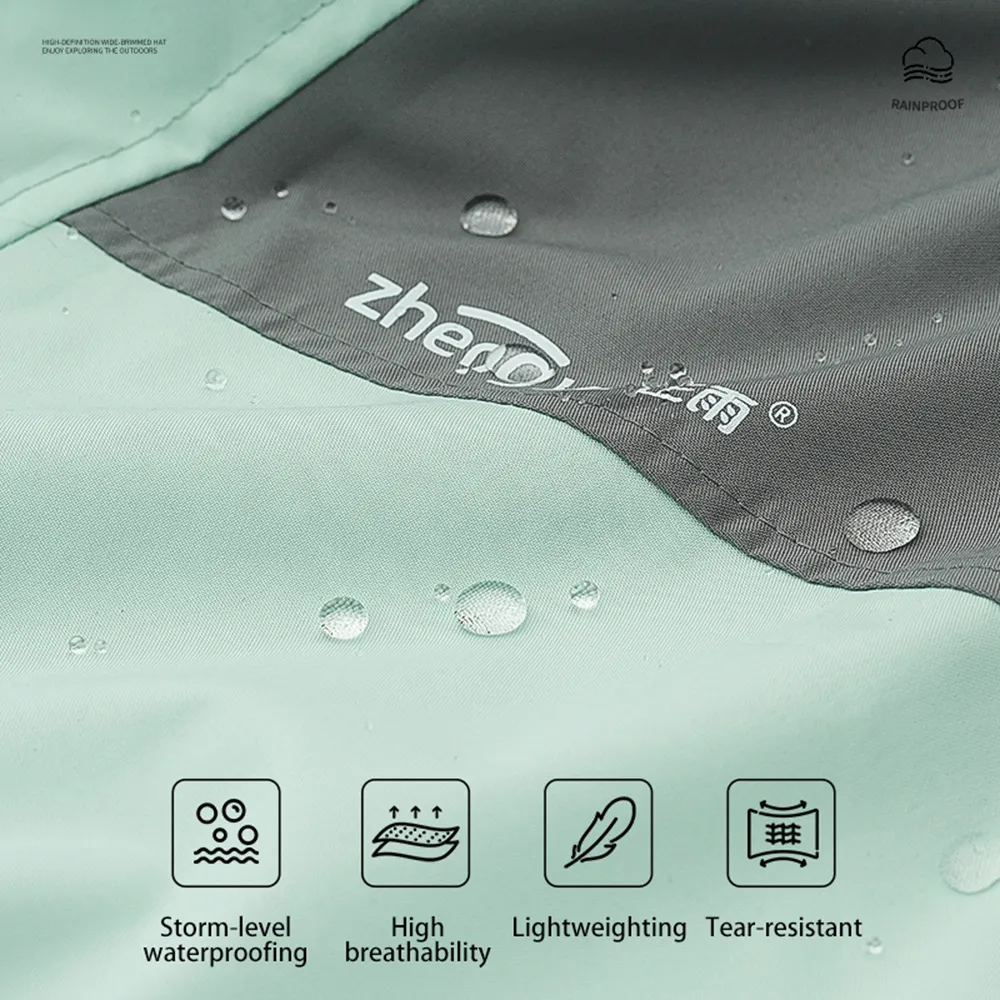
Three selling points stand out from the supplied information: rainproof measures, high breathability, and lightweight construction. Those are exactly the attributes many schoolwear and kids’ outerwear buyers look for, but they should still be evaluated carefully. In this category, “lightweight” only helps if it does not compromise durability, and “breathable” only matters if the child is likely to wear the coat for more than a short walk from car to classroom.
Why student raincoats are harder to source than they look
A student raincoat sits at the intersection of outerwear and daily utility. It has to be easy to pull on before school, practical in a crowded classroom, and comfortable enough for a child to keep on when the weather changes mid-day. It also has to cope with rough handling. Children tug sleeves, sit on wet benches, stuff coats into backpacks, and drag hems across pavement.
That means sourcing teams should think beyond the fabric label. Construction details matter. A loose fit can help with layering, but it also needs smart shaping so the coat does not flap around in wind. Long sleeves are useful, but elastic cuffs need to be comfortable without feeling tight. A hood is essential, yet if it sits awkwardly or blocks peripheral vision, children simply stop wearing it.
This is where many low-cost programs run into trouble. They look fine on a hanger and even pass a quick visual review, but in use they trap heat, soak through at stress points, or feel too cumbersome for daily school routines. Buyers usually regret under-specifying the comfort side of the brief.
What the visible construction suggests
Based on the supplied product information, the garment appears to be a children’s outdoor rain jacket or rain cape with a hood, long sleeves, and a relaxed cut. The silhouette extends below the knees, which is a practical choice for wet weather because it helps protect more of the body than a cropped jacket.
The front opening or concealed placket area suggests the garment is designed for easy wear and cleaner weather protection around the center front. Large patch pockets add utility, especially for school-age children who like to carry gloves, tissues, or small items. The seams are visually prominent, which may help with construction stability and shape retention, though the exact seam-sealing method is not visible and should not be assumed.
The shell looks smooth and matte, with navy/cream and mint/cream color blocking. That finish can be attractive in kids’ outerwear because it reads more refined than glossy PVC-style rainwear. It also tends to suggest a softer hand feel, though the actual fiber content is not provided. Buyers should request swatches and confirm performance rather than relying on appearance alone.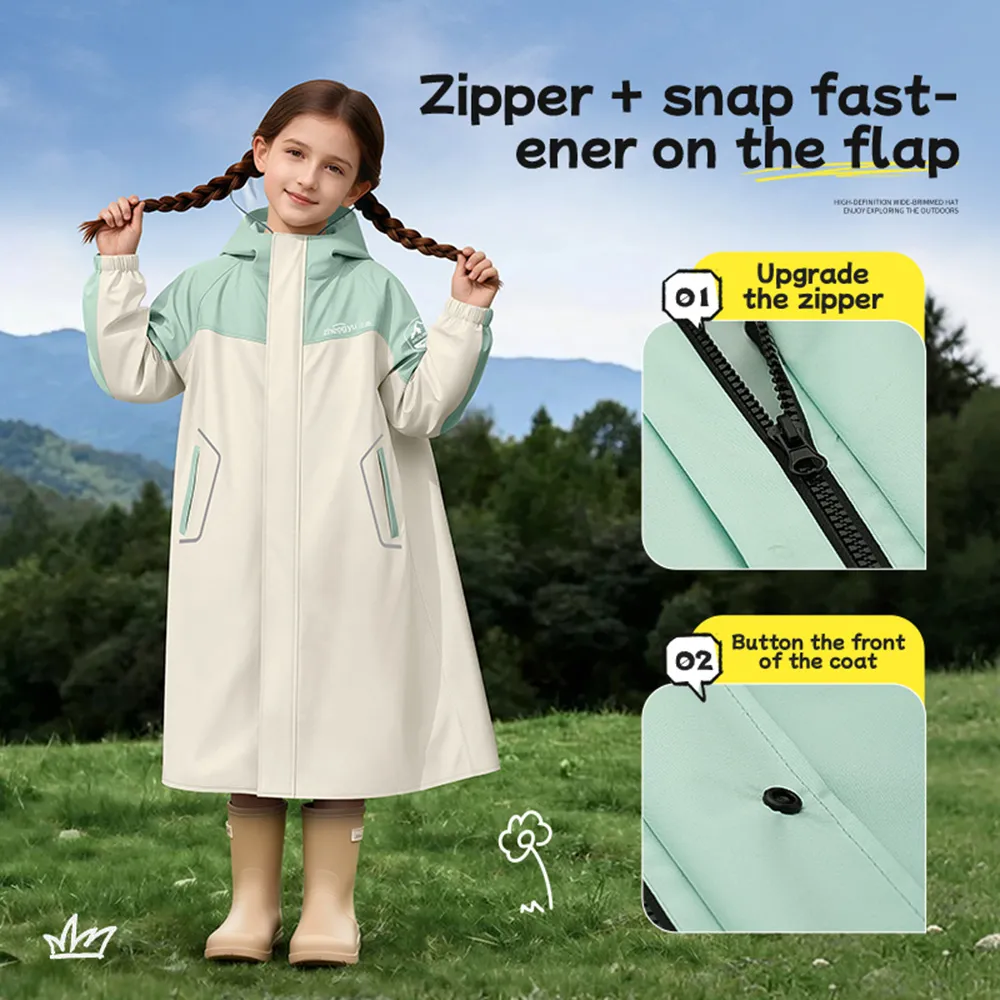
Choosing between raincoat styles for school use
There is no single best format for every student program. The right choice depends on age, climate, and how the garment will be used.
Long rain cape or A-line coat
This is the style most aligned with the product data provided. It gives better coverage, works well over uniforms or layers, and can be a sensible option for walking to school in regular rain. The downside is bulk. If the cut is too generous, younger children may find it awkward on stairs, bikes, or crowded buses.
Lightweight waterproof raincoat
A lightweight waterproof raincoat is often preferred for daily school use because it packs down more easily and is less tiring to wear. That said, lightweight should not mean flimsy. If the fabric is too thin or the finish too delicate, the garment may not hold up to repeated use.
Reflective safety rainwear
For children who walk early in the morning or in low-light conditions, reflective safety rainwear is worth considering. Visibility is not a decorative extra in schoolwear; it is a practical feature. Reflective details can make a real difference near traffic, but they should be placed where they remain visible when a backpack is worn.
Selection criteria that actually matter
Buyers often start with color and price, then work backward into technical details. That approach is understandable, but it can lead to problems later. A better shortlist usually includes the following checks:
Fit and coverage: The coat should cover enough of the child’s body to matter, especially when seated or carrying a bag. A raised hem that looks neat on a mannequin may fail in real rain.
Closure logic: Children should be able to open and close the coat without help. A front opening that is simple and reliable tends to win over complicated fasteners for younger age groups.
Hood behavior: The hood should stay put in wind and not obstruct vision. If it collapses into the neck or shifts excessively, it will not get used.
Pocket utility: Patch pockets are useful, but they should not become water traps. Buyers should ask how pocket openings are designed and whether they drain or shed water reasonably.
Breathability: This matters more in active use than in short commutes. A child on a field trip or hiking outing will heat up quickly in a poorly ventilated coat.
Wash and care expectations: Schoolwear needs realistic care instructions. If a garment requires careful handling that schools and parents are unlikely to follow, returns will follow.
Common mistakes in school rainwear sourcing
One common mistake is assuming waterproof and comfortable mean the same thing. They do not. Some coatings block water well but create a clammy interior. For children, that usually ends with the coat being left in a locker.
Another mistake is over-specifying features that look good in a product sheet but add little value. Extra panels, oversized trims, and decorative hardware can increase production complexity without improving day-to-day use. In schoolwear, restraint often sells better than decoration.
A third issue is ignoring layering. Student raincoats are often worn over sweaters, fleece, or uniforms. A tight fit may look tidy in product photography but becomes unusable in colder seasons. The relaxed silhouette described in the product information is therefore not just a stylistic choice; it is a practical one.
Finally, some buyers focus too hard on a single feature, such as a rainproof claim, and neglect mobility. Children need to bend, run, and sit. If the coat rides up or restricts arms, it will not be worn consistently.
Practical advice for brand and sourcing teams
If you are evaluating a supplier for student raincoats, ask for evidence of the garment’s intended use case, not just a fabric specification. A coat intended for hiking, camping, school trips, and wet outdoor activity needs a different balance than a purely fashion-led rain layer.
The product described here may fit brands that want a softer, longer, more protective children’s outerwear piece. The three stated attributes—rainproof measures, high breathability, and lightweighting—are a useful starting point, especially if your customer values comfort over hard-shell appearance. Still, any final buying decision should be based on samples, wear testing, and clear confirmation of construction details.
Do not assume the “three-in-one” label means detachable layers or an insulated system unless the supplier states that directly. Marketing language in outerwear can be loose, and this is one of those areas where a careful buyer saves time later.
FAQ: student raincoat sourcing questions
What makes a student raincoat different from an adult rain jacket?
Children’s versions usually need easier wearability, lighter handling, and a more forgiving fit for layering and movement. Comfort and simplicity matter more than technical complexity.
Is a longer raincoat always better for school use?
Not always, but longer coverage is useful in real rain. The trade-off is bulk, so the cut must still allow movement and easy entry into classrooms, buses, and cars.
Should visibility be part of the brief?
Yes, especially for younger children or early commutes. Reflective safety rainwear features can be a sensible addition if the garment will be used near traffic or in low light.
What should buyers verify before placing an order?
At minimum: fabric behavior, comfort in layered wear, closure usability, hood stability, pocket function, and whether the claimed weather protection matches the sample.
Next step for buyers
If you are building a schoolwear or kids’ outerwear line, use the sample phase to test how the coat feels after ten minutes, not just how it looks on a hanger. That is usually where the real answer appears. Ask the supplier for construction details, confirm the intended weather performance, and judge whether the silhouette fits the way children actually move.
For student raincoats, the best choice is rarely the most technical-looking one. It is the coat a child will put on without protest, keep on when the sky opens up, and wear again the next week.