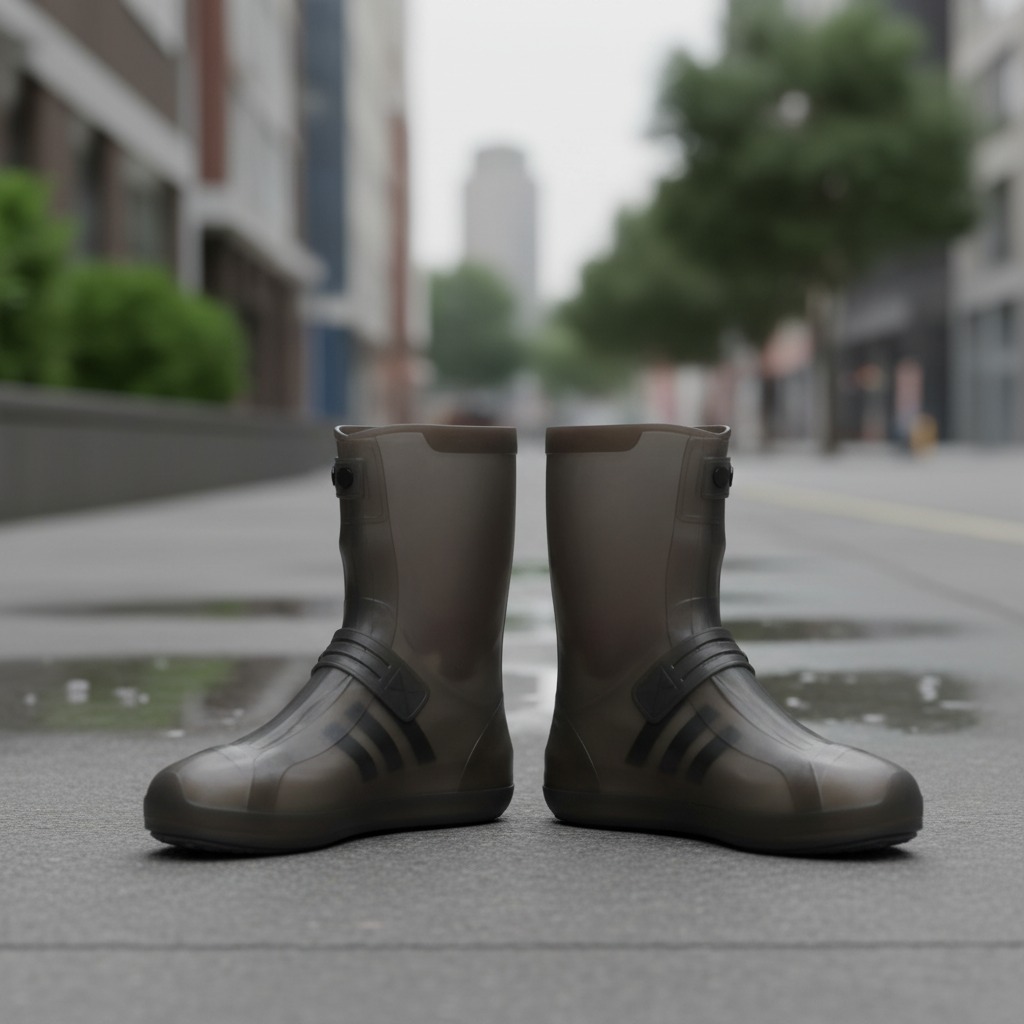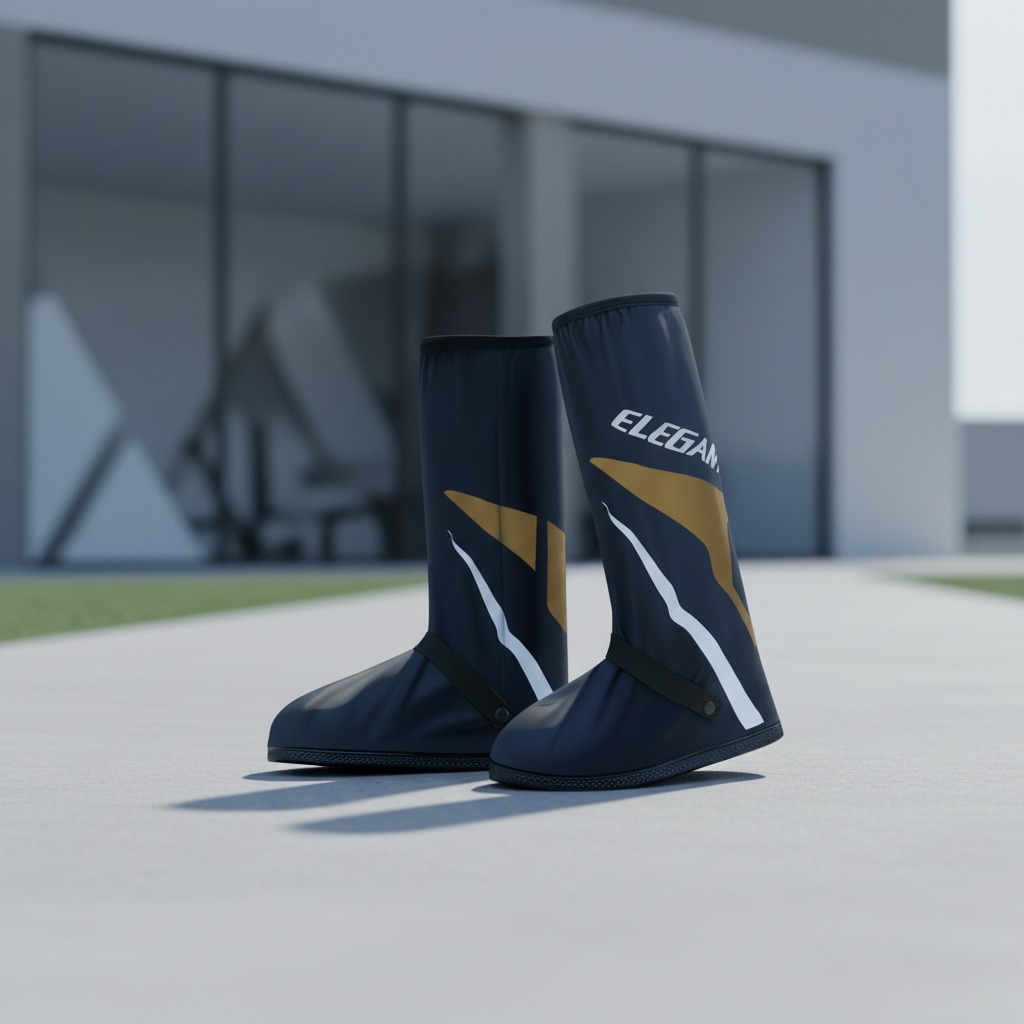

Fashionable rain boots are no longer just about staying dry
For years, rainwear was treated as a compromise: practical, dull, and usually bought only when the forecast forced the issue. That’s changed. Today, fashionable rain boots have to do two jobs at once. They need to protect shoes and lower legs from wet streets, mud, and site grime, but they also need to look presentable enough for commuting, retail-facing work, or a quick stop between the office and the warehouse gate.
That shift matters to buyers. Engineers, sourcing managers, and product teams are not choosing a novelty accessory. They are looking at whether a waterproof over-shoe or overshoe solves a real problem without creating another one: poor fit, awkward bulk, slow donning, or a product that cleans easily but slips in use. The decision is usually less about fashion in the runway sense and more about whether a protective cover can keep a team neat, mobile, and dry when conditions turn messy.
What today’s buyer is really comparing
When people search for stylish rain boots or trendy waterproof boots, they are often trying to solve one of three problems. First, they need a visible protective layer that can be worn over existing footwear. Second, they want a cleaner appearance than a heavy industrial rain boot. Third, they need something that can move between settings: a construction visit in the morning, transport or warehousing at midday, and a client-facing stop after that.
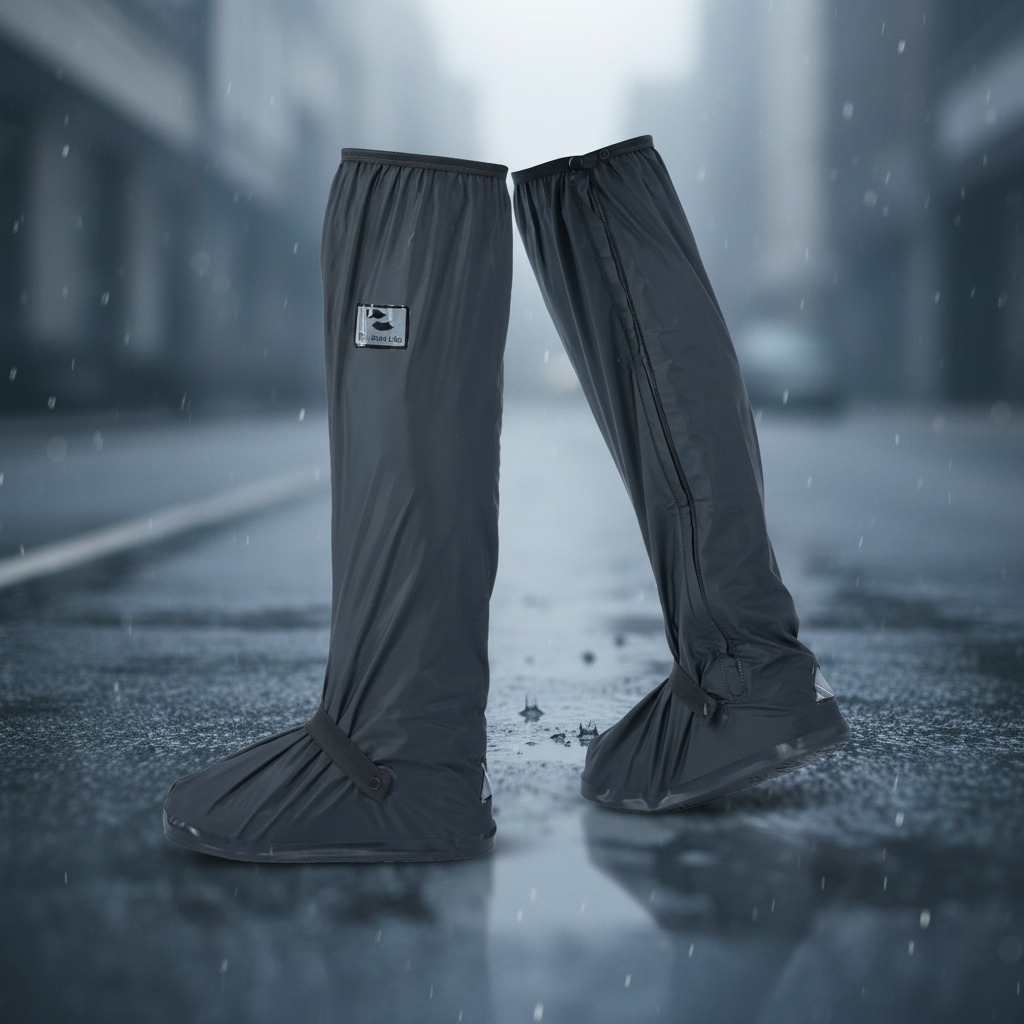
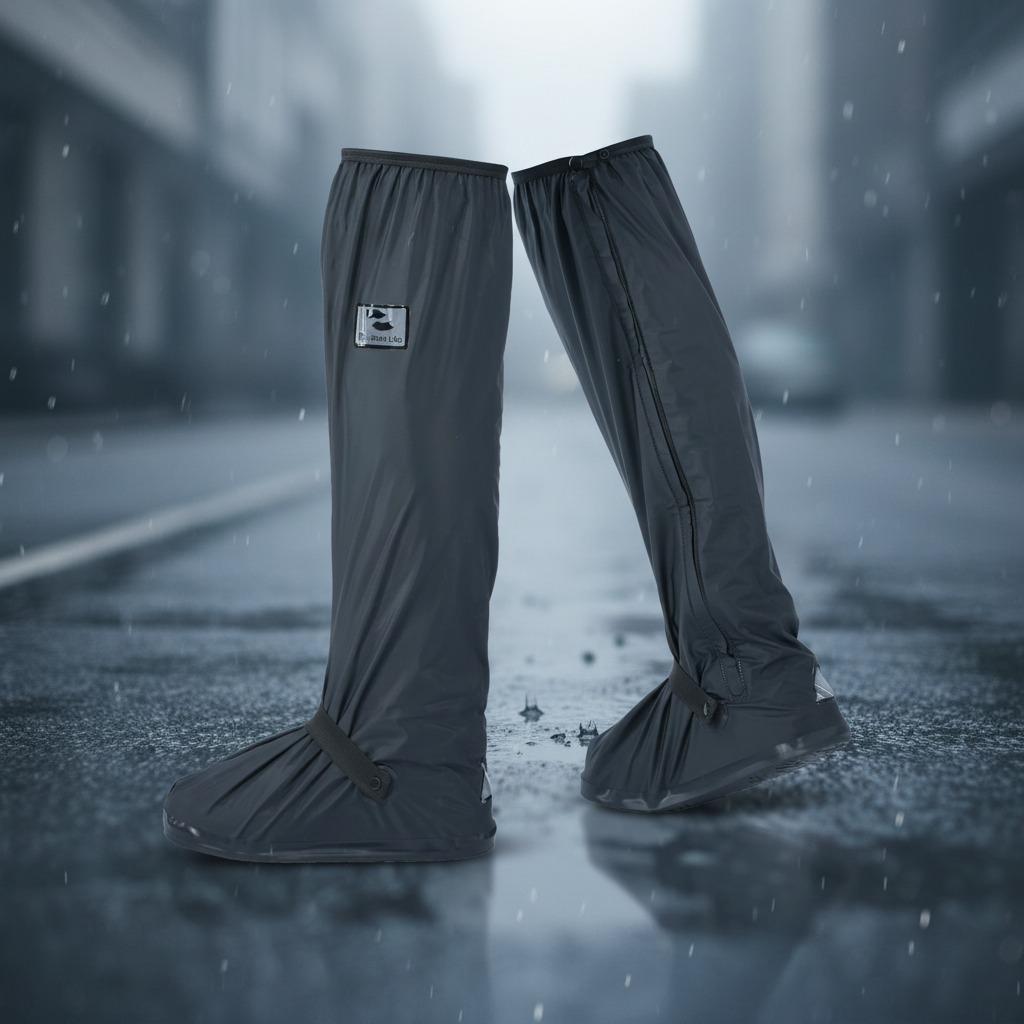
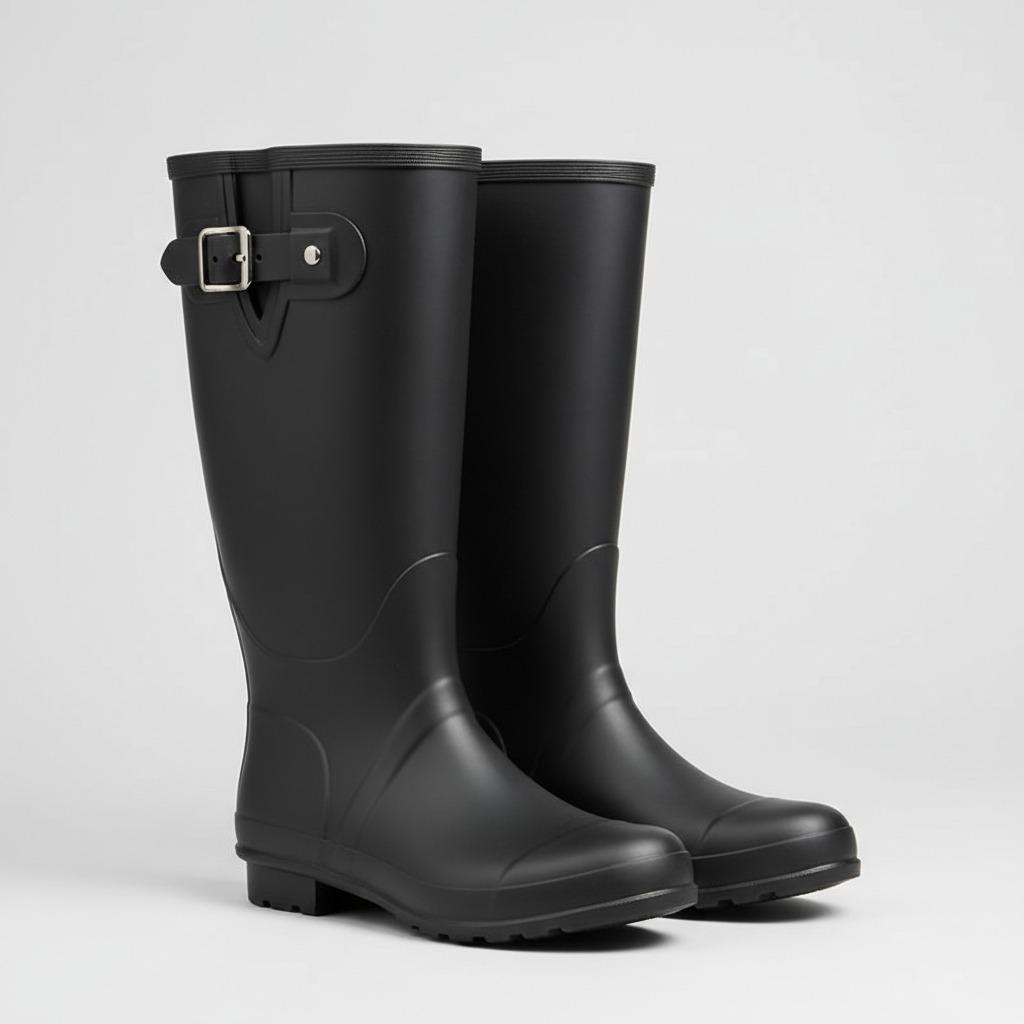
That is where overboots and overshoes enter the picture. Based on the product details provided, the item here is a tall boot-cover design with a wide leg tube, a rounded toe, and a secured ankle or instep area. It appears intended to be worn over regular shoes to keep the shoe and lower leg dry and clean. That basic format is not glamorous, but it is often more practical than asking every user to change footwear for every wet task.
Why the design details matter more than the label
Appearance gets attention, but the construction details decide whether a rain boot product earns repeat use. A smooth outer surface is useful because mud and splash marks are easier to wipe away. A knee-high or shin-high profile offers better coverage than ankle-height solutions, especially when stepping through puddles or moving around wet worksites. An adjustable or secured fit near the ankle or instep helps the cover stay aligned with the underlying shoe, which is important if the wearer is walking, climbing steps, or carrying materials.
The visible side closure or adjustment strip on one leg suggests that opening and fit control were part of the design intent. That is worth noting because tall covers can be hard to put on if the opening is too narrow or the material has too much resistance. On the other hand, a roomy leg tube can be easier to wear, but only if the lower section is held in place. In practical buying terms, the best design is the one that stays put without requiring constant tugging.
Likely construction approach, with one important caution
The product appears to use a flexible waterproof-coated textile or a PVC/PU-type synthetic material with a matte-to-slightly-sheened finish. It likely belongs to the cut-and-sewn waterproof protective apparel category, possibly with heat-sealed or coated-fabric construction. That said, the exact construction method is not visible here, so it would be a mistake to claim more than the image supports.
For sourcing teams, that caution is not just a technical footnote. It affects how you evaluate seam integrity, comfort, stiffness, and long-term appearance. Two products can look similar from a distance and behave very differently after repeated wet-dry cycles.
Fashion and function do not have to fight each other
There is a reason buyers keep circling back to fashionable rain boots even in highly practical environments. People are more likely to wear gear that looks decent. That is true in delivery work, utility visits, agricultural support roles, and even at industrial sites where visitors are expected to arrive with some sense of order. If the product looks sloppy, bulky, or excessively technical, users may leave it unused until the weather is already bad.
That is a simple human factor, but it affects performance. Protection only works when the product is actually worn. A clean silhouette, a black synthetic finish, and a more controlled profile can help a rain cover feel less like emergency gear and more like standard kit. It may not be the main reason a purchaser signs off, but it often helps adoption once the product reaches the field.
Key features buyers should inspect before placing an order
Not every water-resistant-looking boot cover is fit for the same use. When reviewing trendy waterproof boots or similar over-shoe products, it helps to look at the following points in a disciplined way.
1. Coverage height
Tall coverage is one of the strongest visible selling points here. A shin-high or knee-high form reduces splash entry and gives more protection when users step into standing water or wet vegetation. If the work environment is deep mud, drainage-heavy terrain, or repeated outdoor movement, height matters more than styling.
2. Fit at the ankle and instep
A strap, snap, or similar fastener near the ankle helps secure the cover to the shoe. That can reduce shifting and improve confidence while walking. It also helps the lower section follow the shoe profile instead of ballooning awkwardly around it. A practical aside: if the fit system is too fiddly, users skip it. That is a common failure point in protective accessories.
3. Surface finish
A smooth outer finish is not only about appearance. It usually means easier cleaning after mud, dust, or light chemical splash exposure, depending on the material and intended use. Buyers should still verify the cleaning method for the actual material used, because not every synthetic coating tolerates the same cleaners.
4. Sole and toe area
The rounded toe and reinforced-looking foot area suggest the product is designed to cover the shoe rather than function as a standalone boot. That distinction matters. An overshoe can protect what is already being worn, but it should not be assumed to deliver the same ground contact performance as a dedicated rain boot unless the maker provides that data.
Where these products make the most sense
In commercial use, overboots are often chosen where users need temporary waterproofing rather than a permanent footwear change. That includes site inspections, warehouse and transport work, gardening, agriculture, utility support, and other wet outdoor tasks. They can also be useful in businesses where workers move between clean indoor spaces and dirty outdoor zones during a single shift.
That versatility is one reason buyers consider them alongside more traditional rain boots. A team may not want to issue every worker a separate pair of dedicated boots if most of the week is spent indoors. In those situations, a protective overlay can be the more economical and less space-consuming choice, provided the fit and durability are acceptable.
Common mistakes when sourcing rain protection gear
The biggest mistake is assuming “waterproof” means ready for every condition. The provided product information does not confirm waterproof rating, puncture resistance, slip resistance, insulation, or temperature range, so those points must be verified separately. Another common mistake is ignoring how the item will be donned and removed. If the overboot takes too long to put on, workers may leave it in the locker room.
Buyers also sometimes focus on color and silhouette while neglecting orientation and closure placement. The visible left/right shaping suggests the product may be designed with side-specific geometry. That is useful for fit, but it can complicate inventory and training if the item is not clearly marked. Small operational details like that create real friction once product reaches a team of twenty or fifty users.
How to evaluate whether a product is right for your use case
If you are comparing fashionable rain boots against a protective over-shoe like this one, ask a few simple questions. Will users wear it over regular shoes, or do they need a full standalone boot? Is the main requirement splash protection, mud protection, or general presentation in wet weather? Do users need quick cleaning between tasks? Will they be walking long distances, standing on rough ground, or mostly moving short distances between controlled areas?
Those answers matter because a product that looks stylish in a catalog can still be wrong for a field crew. Likewise, an industrial-looking protective cover may be the better choice if your priority is function, but a more refined black finish can help it pass in semi-public settings. The best purchase is usually the one that matches the real work pattern, not the most obvious visual cue.
FAQ for buyers and product teams
Are fashionable rain boots always full rain boots?
No. In many cases, the phrase is used loosely and may include overshoes or boot covers. The product described here appears to be an overboot rather than a standalone boot.
Can they be used in industrial settings?
Potentially yes, especially for wet outdoor work, site visits, or temporary protection. But suitability depends on the exact material, sole performance, and any required safety standards, none of which should be assumed without confirmation.
Do stylish rain boots have to sacrifice durability?
Not necessarily. Styling can come from silhouette, finish, and cleanliness of design. Durability still comes from construction, seam integrity, and material choice.
A practical next step for buyers
If you are sourcing fashionable rain boots or evaluating a waterproof over-shoe for commercial use, start by separating appearance from function. Confirm the intended wearing method, the actual material, the closure system, and whether the product is meant for occasional wet-weather use or repeated field work. Ask for samples if the application is demanding, because the feel of the material and the ease of getting the boot over existing footwear are hard to judge from photos alone.
For teams that need a neat-looking protective option with tall coverage, a secured ankle fit, and an easy-wipe surface, this type of boot cover is worth a closer look. Just do the boring checks first. In rainwear, the boring checks are usually the ones that save you from an expensive return order later.